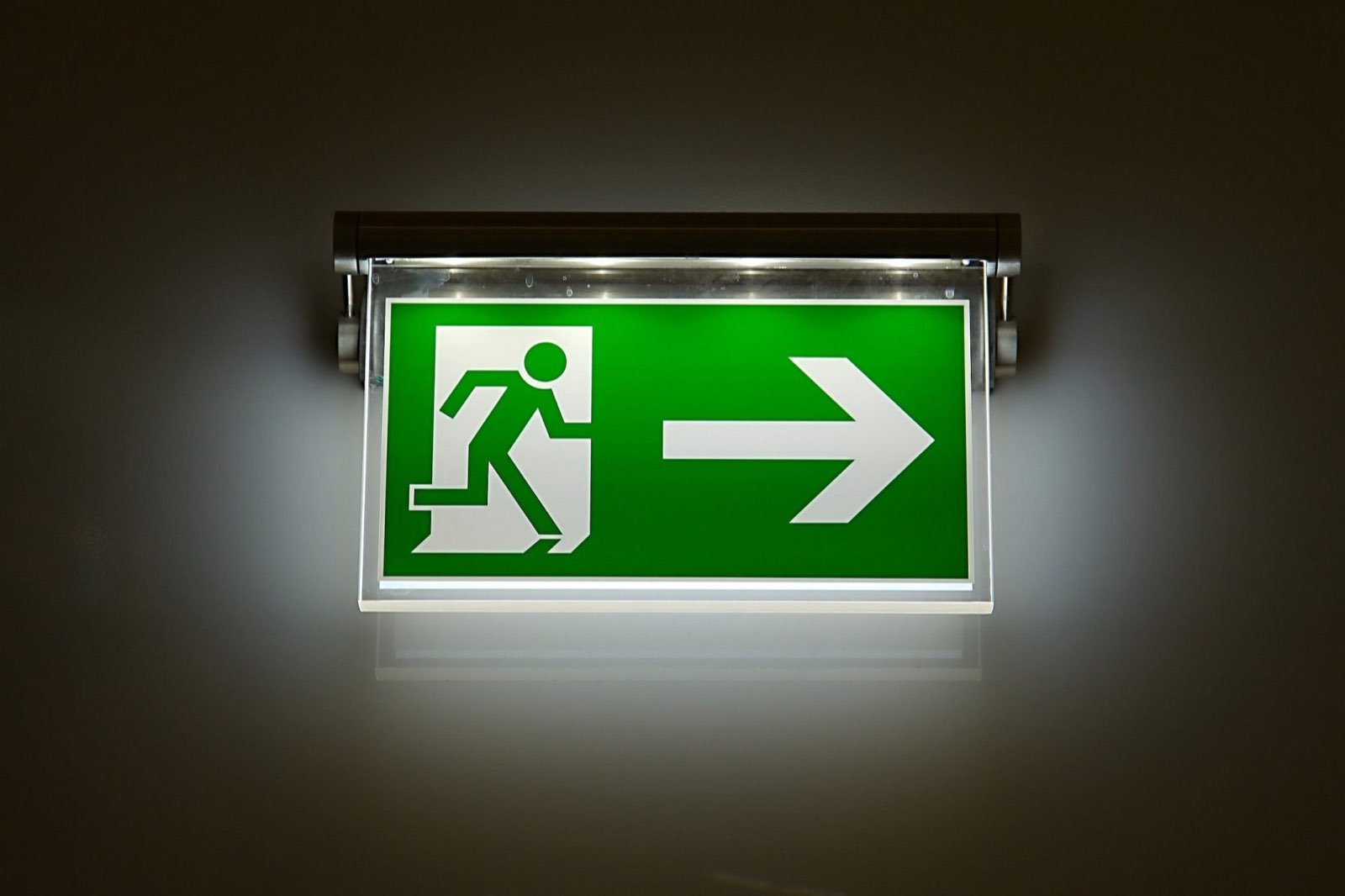
Escape routes lit when it matters
Emergency lighting is a legal requirement in virtually every non-domestic and communal building. We design schemes that illuminate escape routes, final exits, changes of level, fire equipment and call points to the right levels, and install maintained or non-maintained luminaires and exit signs to suit.
We then keep it compliant, with monthly function tests and annual full-duration (3-hour) tests, results logged and certificates issued. Faulty fittings and failed batteries are replaced promptly.
Self-testing and addressable emergency lighting is available where you want to cut manual testing time across a large or multi-site portfolio.
A complete, maintained system
Design & installation
Escape route and open-area lighting designed to the correct lux levels.
Self-test systems
Automatic self-test and addressable systems that log their own results.
Testing & certification
Monthly function and annual 3-hour duration testing with documentation.
Remedial works
Fast replacement of failed luminaires, batteries and exit signage.
What an emergency lighting project covers
New schemes, upgrades and ongoing compliance testing.
- Emergency lighting design to BS 5266-1
- Maintained and non-maintained luminaires
- Illuminated and LED exit signage
- Self-test and addressable systems
- Monthly function testing
- Annual full-duration (3-hour) testing
- Log books and completion certificates
- Luminaire and battery replacement
Standards we work to. Systems are designed and installed to BS 5266-1 and BS EN 1838, with testing carried out to the schedule those standards set and results recorded for your fire safety log.
Where we install this
Common questions
How often does emergency lighting need testing?
A short function test every month and a full-duration (3-hour) test once a year, per BS 5266. We schedule both and keep the records for you.
Who is responsible for emergency lighting compliance?
The building’s responsible person, often the employer, owner or managing agent. We provide the design, testing and certification that evidences your compliance.
Can you reduce the time spent testing across many sites?
Yes. Self-testing and addressable emergency lighting carries out and logs its own tests, which cuts manual labour significantly across a portfolio.
Do LED emergency fittings still need battery replacement?
Yes. The LED itself lasts a long time, but the backup battery has a finite life, typically around four years, and is replaced as part of maintenance.
Can you certify a system someone else installed?
We can inspect and test an existing system, report on any shortfalls against BS 5266, and then maintain and certify it going forward.
Often installed together
Detection and warning to BS 5839, tested alongside your emergency lighting.
Supporting circuits, testing and remedial works by NAPIT engineers.
Book an emergency lighting survey
New scheme or a compliance test that’s overdue: we’ll get you covered.